Your first nine-patch block
Updated 30th April 2026 4 min readIf you make only one block to learn the craft, make this one. The nine-patch is small, quick and forgiving, and it teaches the three skills that every later pattern is built on: accurate cutting, a consistent seam, and a flat press.
A nine-patch is exactly what it sounds like — nine squares of fabric sewn into a three-by-three grid. There are no curves, no points to match across the block and no special tools beyond what most makers already own. By the time yours is finished you will have done, in miniature, almost everything that assembling a full quilt top requires.
- Finished size
- 6″ (15 cm) square
- Time
- About an hour
- Level
- Beginner
- Skills
- Cutting · ¼″ seam · pressing
What you will need
- Fabric
- Two quilting-weight cottons that contrast — a "light" and a "dark".
- Cutting
- Rotary cutter, ruler and self-healing mat (or sharp scissors and a marked template).
- Sewing
- Needle and thread, or a machine with a quarter-inch foot.
- Pressing
- An iron and a hard surface.
Cut the squares
Cut nine squares, all the same size — five of one fabric and four of the other, so the finished block reads as a checkerboard. A 2½-inch (6.4 cm) cut square is a comfortable size to handle. Accuracy here matters more than anything else that follows: if the squares are not identical, nothing downstream will line up.
Sew the rows
Lay the squares out in their three-by-three arrangement before you sew, alternating light and dark. Sew them into three rows of three, keeping a steady quarter-inch (6 mm) seam allowance on every seam. Sew right sides together, edges aligned, and resist the urge to stretch the fabric as it feeds.
Before you start the real block, sew two scrap squares together and measure the result. If the pieced pair is not exactly the intended size, adjust where your fabric runs against the guide until it is. Five minutes here saves an hour of unpicking later.
Press
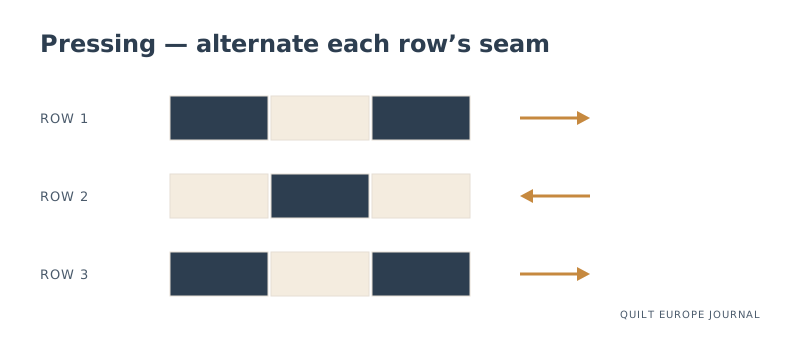
Press each row’s seam allowances to one side, and press the three rows in alternating directions — row one toward the right, row two toward the left, row three toward the right. This lets the seams "nest" snugly against each other when you join the rows, so the intersections meet without bulk.
Join the rows
Pin the rows together at each seam intersection, matching the nested seams, and sew with the same quarter-inch allowance. Press the two long seams, and your first block is done. Lay it on a flat surface: it should sit flat, square at the corners, with the four inner intersections meeting cleanly.
Where to go next
Make a handful more and you have the makings of a small cushion or a sampler. When you are ready to vary the rhythm of the work, read hand-piecing vs machine-piecing; when you want to choose your own fabrics with confidence, choosing fabric and building a palette is the next step.