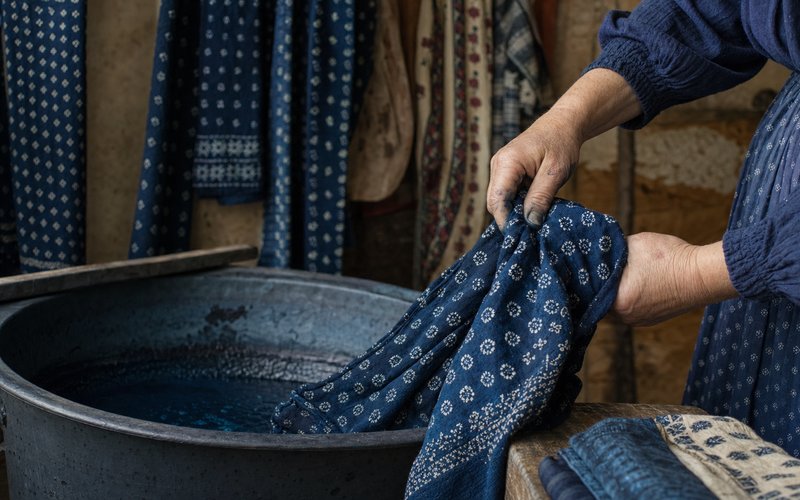
The indigo dyers of Hungary
How a centuries-old blue-dyeing tradition still shapes the patchwork of the Great Plain — and the makers keeping the vats alive.
A tradition is only ever as alive as the hands still working it. The gallery is where we tell the stories behind the stitches — the makers, the regions and the quilts that carry Europe’s textile history forward.
Each feature is a short read paired with a single photograph: a dyer lifting cloth from an indigo vat, a quilt worn soft by sixty years of use, a sampler that doubles as a notebook. We choose images that show the work and the hand behind it, and we point you on — to the guide for a technique, or to our events coverage for a show where you might see such work in person.
How a centuries-old blue-dyeing tradition still shapes the patchwork of the Great Plain — and the makers keeping the vats alive.
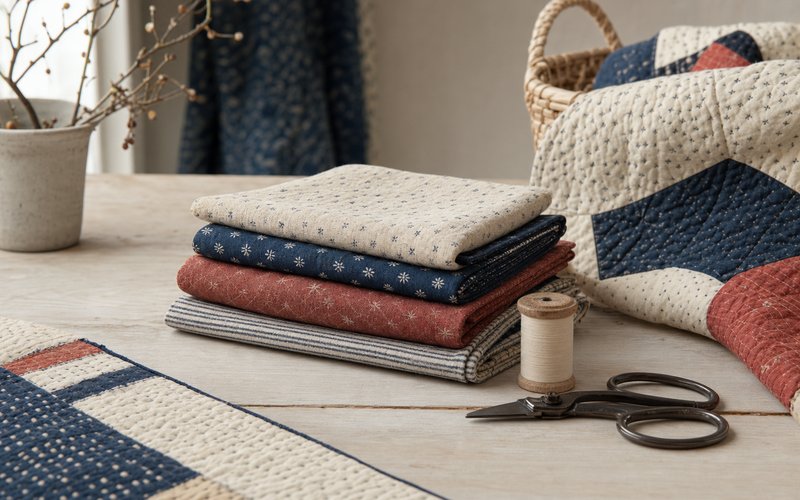
A Scandinavian quilter on working with a deliberately narrow palette, and why restraint can read as richness.
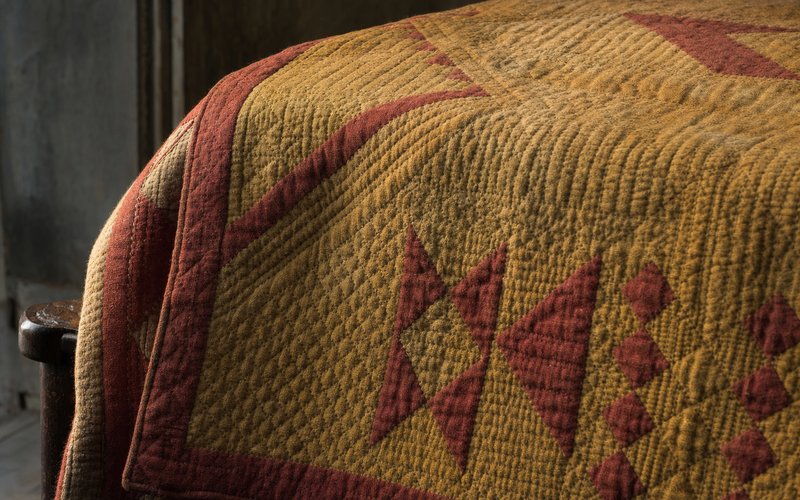
The dense, wholecloth wool quilts of the Welsh valleys, and what their stitched geometry tells us about the hands that made them.
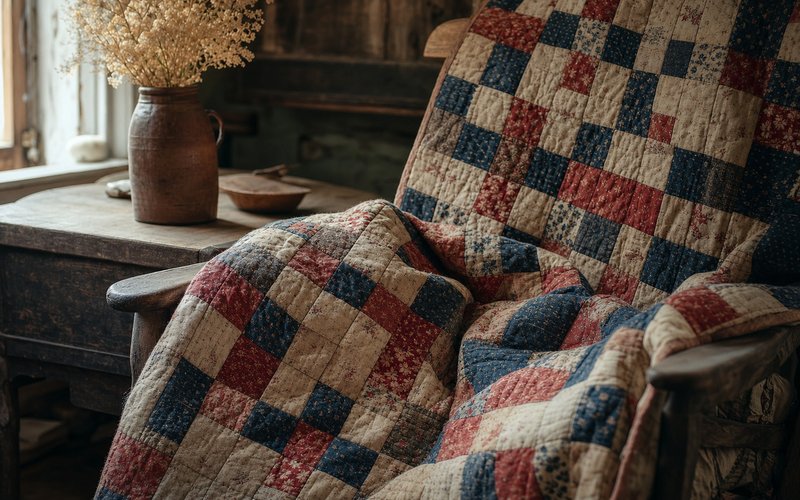
One maker returns to the nine-patch she learned as a child, and finds the lessons of a first block still hold.
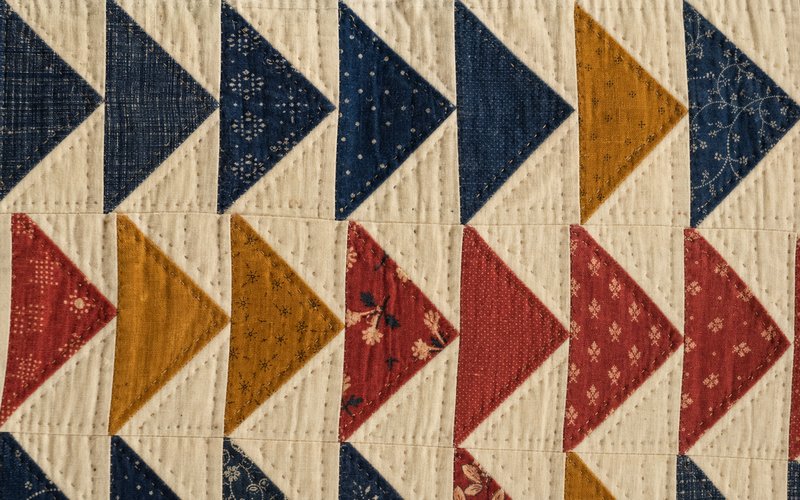
A single classic unit, built by four different methods — and how the choice changes the look of the finished flock.
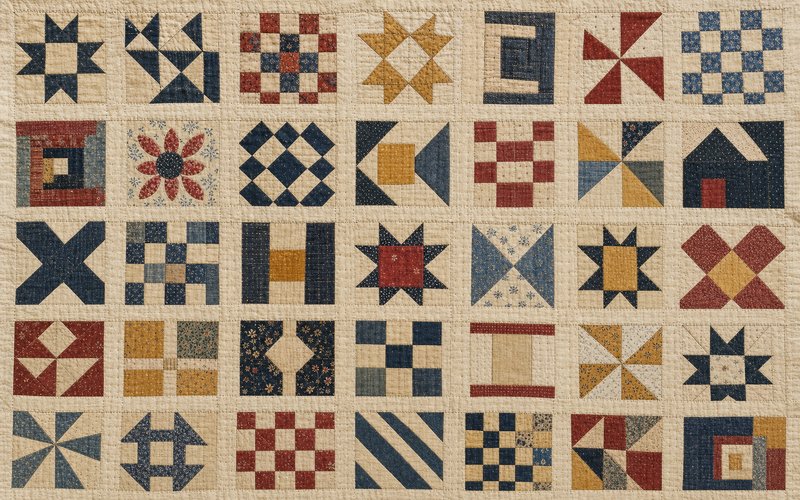
Why the humble block sampler has always doubled as a maker’s notebook, a place to try, fail and remember.
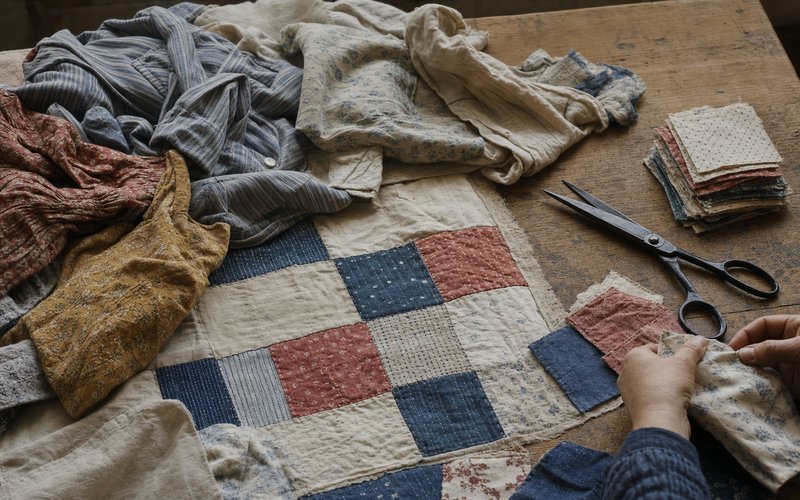
A maker who builds quilts entirely from worn shirts, linens and dresses — and the discipline of letting the cloth choose the pattern.
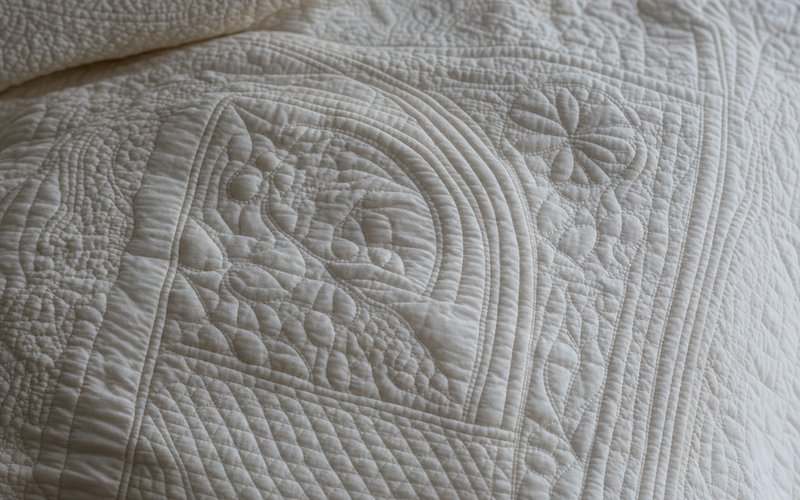
Boutis, the corded wholecloth quilting of southern France, where the pattern is raised in relief rather than pieced in colour.
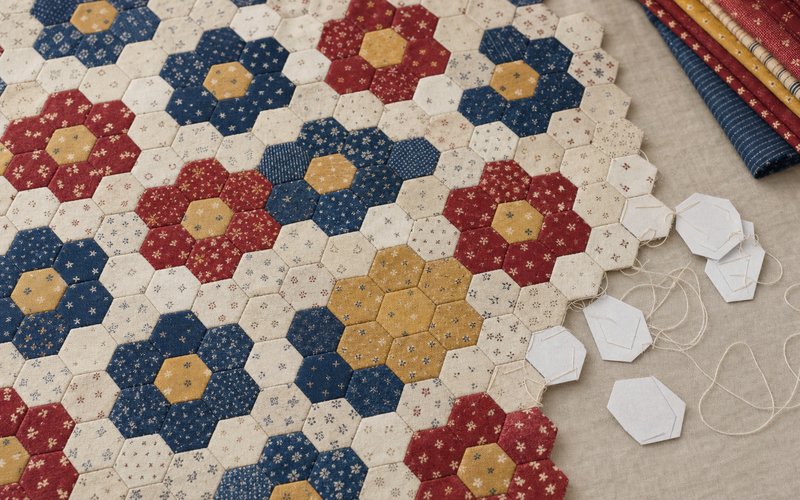
English paper piecing and the grandmother’s flower garden — a slow, hand-sewn method that rewards patience over speed.
These features grow out of the same curiosity that drives the rest of the journal: a wish to understand how patchwork and quilting are actually practised across the continent, region by region, hand by hand. We are not trying to be comprehensive, and we have no league table to fill. We follow what is interesting and true. Four things tend to decide it.
We are drawn to work that is still being made and used, not only preserved — the regional practices that have survived because someone kept stitching them.
Europe’s patchwork is plural. We look beyond the obvious hubs to the valleys, plains and small towns where distinct local habits of cloth and colour took hold.
A feature is about a maker, a quilt or a method — never a product or a promotion. If a story cannot stand without something being sold, it is not for us.
The best features leave you knowing something you can use at your own table — a technique, a way of seeing colour, a reason a quilt looks the way it does.
Quilt Europe Journal is an independent publication. A feature is editorial — we are not a guild, a gallery or a dealer, we do not represent the makers we write about, and a profile is never paid for or sponsored. Where a maker, guild or event is named, refer to them directly for anything official.
If you are a maker with a story — a regional tradition, a body of work, an archive worth surfacing — we are always glad to hear from you. The about page explains who we are and how to get in touch.
If there is a regional tradition, an archive or a body of work you think we should see, tell us — the gallery grows by word of mouth as much as by our own digging.