Piecing by hand or by machine
Updated 19th May 2026 4 min readThere is no single right answer to how a quilt top should be assembled — only trade-offs. Here is how the two methods actually compare once the romance and the snobbery are set aside.
Piecing is simply the act of sewing patches of fabric together along their edges to build a block, and a block into a top. Whether you do it with a needle in your hand or a machine under your fingers changes the rhythm of the work far more than it changes the result. Both can produce a heirloom; both can produce a pucker. What differs is how the time is spent, how much control you have at each seam, and where you can do the work.
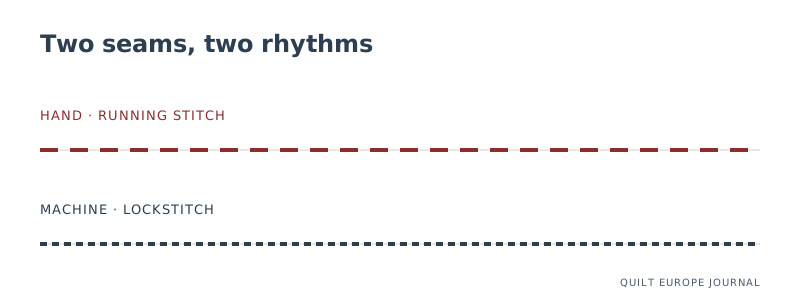
Speed
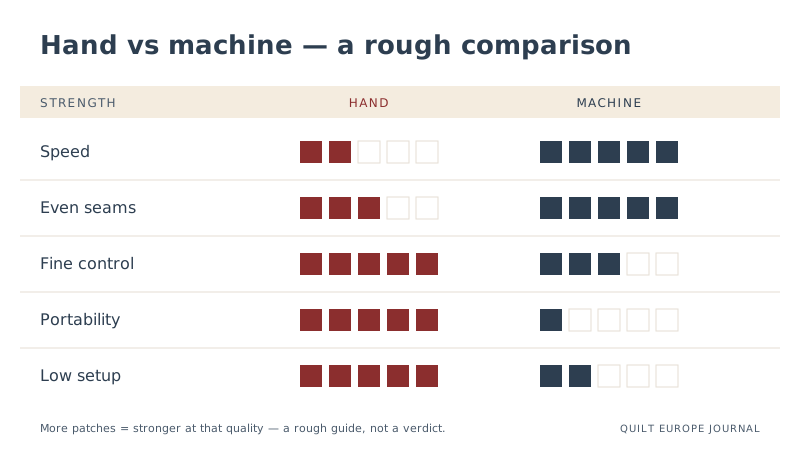
Machine-piecing is the clear winner on pace. A straight seam that takes a minute or two by hand is done in seconds, and chain-piecing — feeding one pair of patches after another without cutting the thread — turns a stack of squares into rows remarkably quickly. If you have a deadline, a large top or simply limited patience for repetition, the machine is the practical choice.
Hand-piecing is slow by nature, and for many makers that is precisely the point. The pace is meditative, the work is quiet, and you are never more than an arm’s length from being able to stop.
Choose the machine when the seams are long and straight. Reach for the needle when the seams are short, awkward, or when the sitting matters as much as the quilt.
Accuracy and control
Machine seams are even and repeatable: a quarter-inch foot or a marked plate gives you the same seam allowance every time, which matters enormously when dozens of intersections have to line up. The cost is that you commit to the whole seam at once, and unpicking is tedious.
Hand-piecing trades evenness for control. Sewing along a marked line stitch by stitch, you can ease two slightly mismatched edges together, and — crucially — you can sew exactly to a seam intersection and stop, leaving the seam allowance free. That makes matching points and sewing set-in (Y) seams far less stressful than on a machine.
Portability and cost
Hand-piecing needs almost nothing: a needle, thread, a thimble, pins and your cut pieces. It travels in a sandwich bag and works on a train, in a waiting room or in front of the television. Machine-piecing needs a machine, a flat surface and power, which roots the work to one place.
So which should you choose?
If you are starting out and already own a machine, learn to piece on it; the quick wins keep motivation high. If you do not own a machine, do not let that stop you — generations of quilts were pieced entirely by hand, and a first nine-patch block is a fine place to begin with a needle. In the long run, most committed makers end up doing both, letting the project decide.
The needle and the machine are not rivals so much as two tools for the same craft.